How to Build a Merchandise Strategy for Your Race
By Raquel Oaks
Most race organizers think of merchandise as an afterthought.
A few shirts on race day. Maybe some leftover items sitting in boxes afterward.
But when done right, merchandise can be so much more than that. It can:
- Generate additional revenue
- Promote your race before it even happens
- Build long-term brand recognition
- Keep your event top-of-mind all year
The difference comes down to having a clear strategy -- and the right system to support it.
Start Selling Before the Race
One of the biggest missed opportunities is waiting until race day to sell merchandise.
By then, you’ve already lost weeks (or months) of exposure and revenue.
Instead, start selling during registration.
When participants are signing up, they’re:
- Excited about the event
- Read to commit
- More likely to add extras
Offering merchandise at checkout makes it easy for participants to:
- Grab a shirt
- Add accessories
- Represent your race early
This does two powerful things:
- Increases revenue upfront
- Turns participants into walking advertisements before race day
When someone wears your race shirt while training, they’re promoting your event to everyone they pass. Merchandise isn’t just about sales- it’s about visibility.
Every shirt, hat or tumbler becomes part of your marketing strategy.
- Design merchandise people actually want to wear
- Offer items other shirts other than the yearly race shirt
- Encourage participants to use them during training
When your runners wear your gear they create organic awareness, spark conversations, and attract new participants.
This kind of promotion is authentic, and far more powerful than traditional advertising.
Check out 7 Marketing Strategies to Sell Race Merchandise
Keep Selling Year-Round with an Online Store
Your race might be one day -- but your brand exists all year.
A major advantage of having an online merchandise store is that you’re not limited to race day sales.
You have the option to:
- Keep your store open year-round
- Offer seasonal or limited items
- Promote merchandise during key times (registration launches, training season, holidays)
This creates consistent revenue opportunities and keeps your event relevant even when it’s not race season.
With a built-in store, participants can browse and purchase whenever it’s convenient- without needing to wait for race day.
Stay Organized Behind the Scenes
As merchandise sales grow, organization becomes critical.
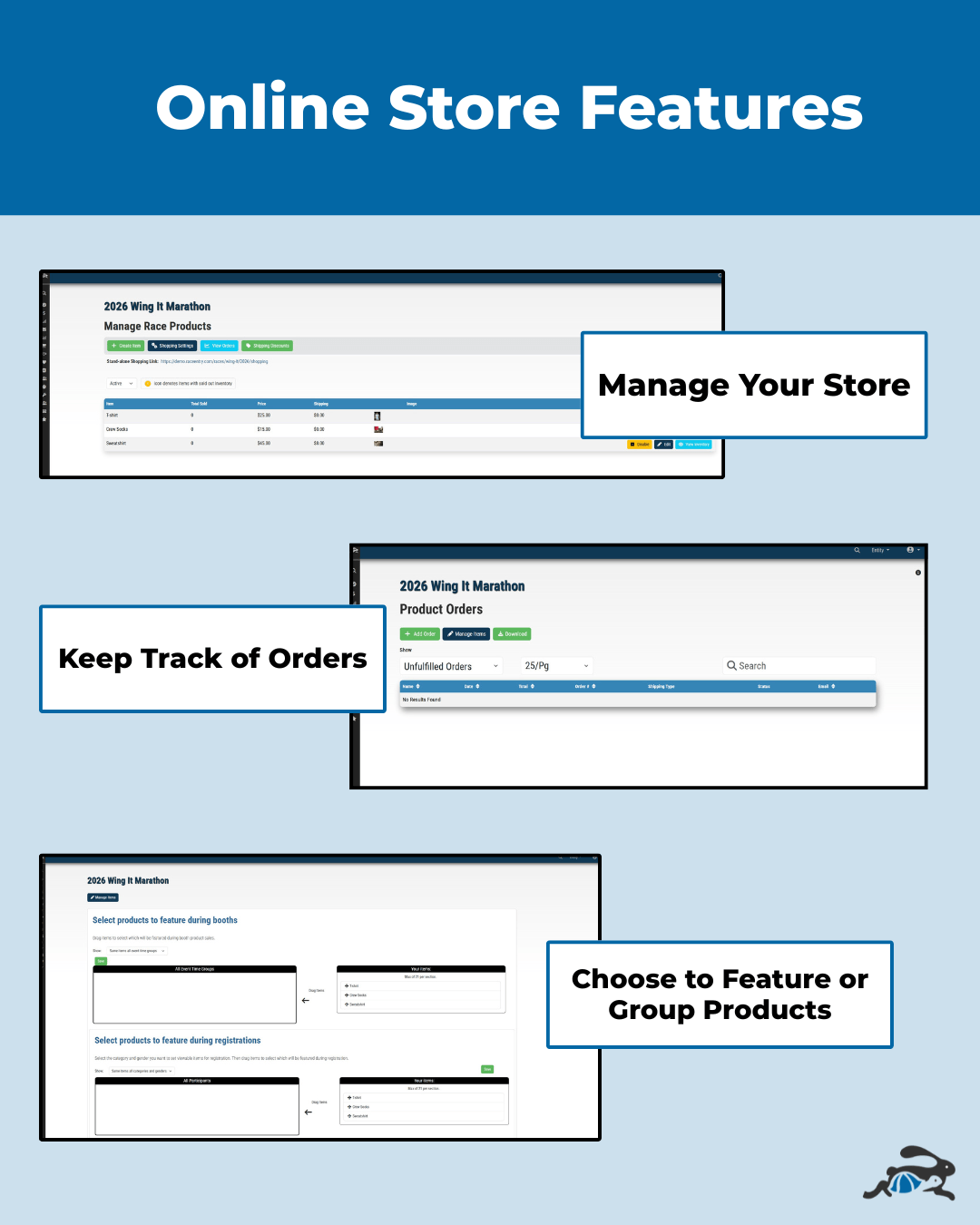
Without a system, it’s easy to lose track of inventory, sales channels (registration checkout, point of sale, standalone shopping), pricing, and orders.
As part of Race Entry’s software, you gain a system that allows you to:
- Track how many items are sold
- Manage pricing and shipping
- Monitor inventory in real time
- View sales across all channels
- Group products by categories
Having everything in one place ensures you stay in control -- no matter how much you sell.
Use Data to Improve Your Strategy
One of the biggest advantages of a structured system is visibility into what’s working.
Instead of guessing, you can see:
- Which products sell best
- When people are buying
- Where sales are coming from
Based on this data, you can adjust product offerings and focus on what performs. Additionally, there are options to feature those products that are the most popular. Not all products preform equally.
If everything is treated the same your best items can get lost. A good approach is to: feature top-selling products, group similar items together, and make it easy for customers to browse.
When your store is organized and visually clear- with images and featured products -- people are more likely to purchase.
A simple, clean shopping experience makes a big difference.
Create a Seamless Experience
At the end of the day, your merchandise strategy should feel like a natural part of your event- not an extra step.
When everything is connected: registration, online sales, booths, and point of sale. You create a seamless experience for participants.
They don’t have to think about how to buy -- they just do it.
Focus on the Bigger Picture
You probably already know that merchandise can increase your revenue.
But with everything else involved in organizing a race, building a merchandise system from scratch often isn’t realistic.
That’s why having a solution already built into your registration platform makes such a difference.
Instead of managing separate tools, you can create and customize an online store that fits your race—without adding more work to your plate.
This allows you to focus on growing your event, while your merchandise system works seamlessly in the background.
A strong merchandise strategy does more than increase revenue. It helps you:
- Promote your race organically
- Build a recognizable brand
- Stay connected with your audience year-round
When everything is managed in one place- from registration to sales tracking- you-re not just selling products.
You’re building a system that supports long-term growth and your other marketing strategies for your race.
Merchandise shouldn’t be an afterthought, it should be part of your strategy from the beginning.
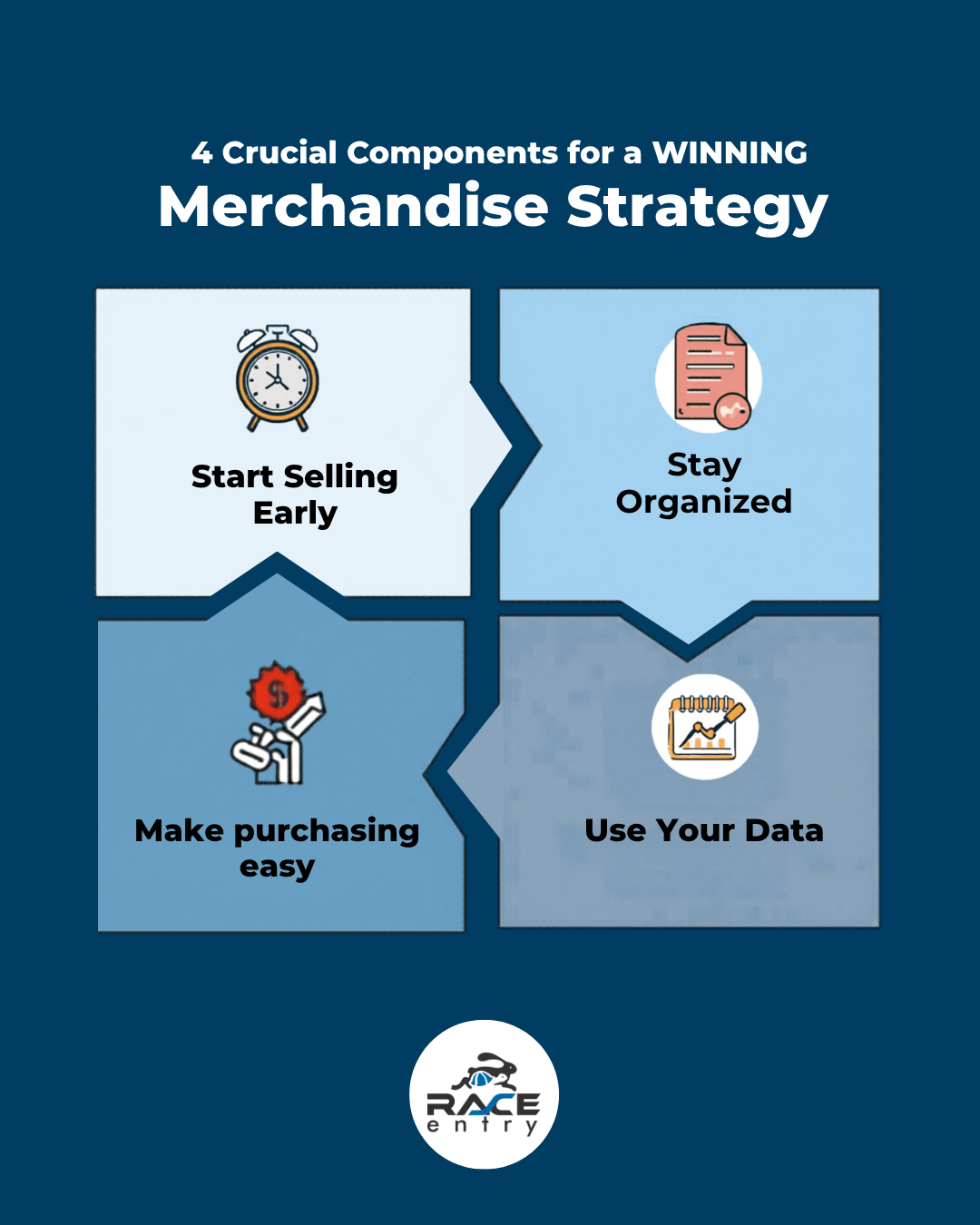
When you do these crucial things:
- Start selling early
- Make purchasing easy
- Stay organized
- Use your data
You turn merchandise into a powerful tool for both revenue and marketing
The best race brands aren’t just experienced on race day -- they’re worn, shared and remembered all year long.