7 Marketing Strategies to Sell Race Merchandise
Why Sell Merchandise at Your Race? Contents
- Why Sell Merchandise at Your Race?
- Merchandise Marketing Strategies
- 1. Know Your Target Audience
- 2. Select Products that are Versatile and Reusable
- 3. Design Merchandise that You Would Want to Use
- 4. Align Your Design with Your Brand
- 5. Decide Which Products are Included with Registration
- 6. Sell at Key Moments
- 7. Offer Exclusive and Customizable Items
By Asianna Madsen
Why Sell Merchandise at Your Race?
Increase Brand Recognition
Merchandise is a powerful tool for promoting your race and enhancing customer loyalty. Offering physical products not only leaves a lasting impression but also helps differentiate your event from competitors.
Runners who purchase merchandise are more likely to remember your race and return each year. By offering high-quality, exciting products, you generate hype and foster a positive connection between participants and your brand.
Well-designed merchandise acts as a natural marketing tool. Every item worn or used by a participant becomes a mobile advertisement, spreading awareness of your race and reinforcing brand recognition. By creating memorable, functional products, you turn each customer into an enthusiastic advocate for your event.
Increase Revenue
Selling merchandise is also an effective strategy for increasing sales. Offering physical products during registration can help you earn more money while also growing your race. If you’re looking for a way to increase your revenue without adding to your number of participants, merchandise is your best option.
Merchandise Marketing Strategies
Maybe you’ve been considering selling merchandise, but you’re not sure if it will really help your race grow. We’ve put together some tips to improve your marketing strategy and make sure your new merchandise will be a huge success.
1. Know Your Target Audience
Some of the best marketing advice we can give you is to know what your audience likes. In order to create merchandise that resonates with your participants, you need to know who they are and what interests them.
Every group of people is different and unique, and the best merchandise might vary depending on the specific event. Understanding the demographics and psychographics of your runners is a good approach to improve your merchandise sales.
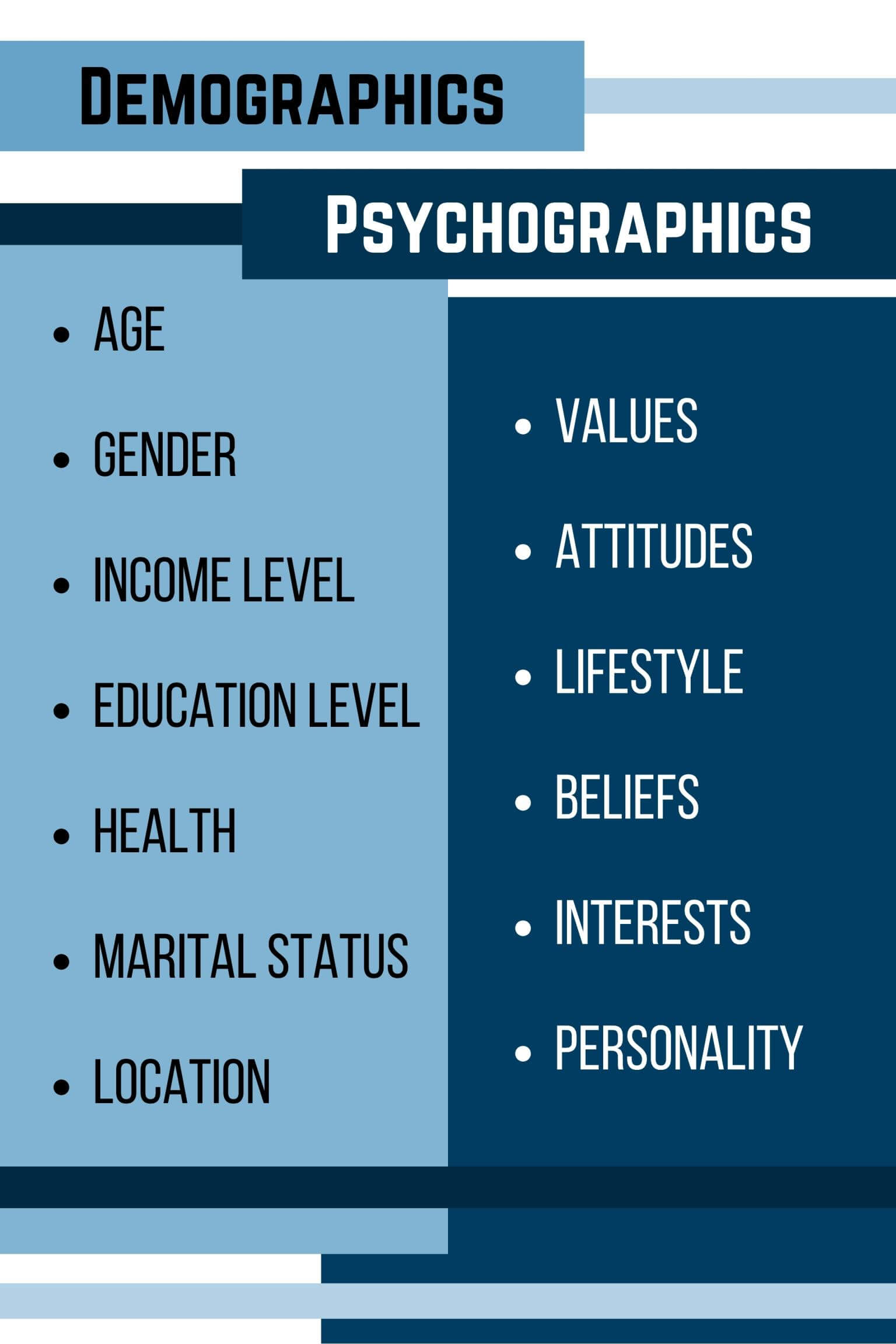
Demographics are general types of information that can categorize your participants and help you understand them better. This includes age, gender, income level, education level, and health status.
Psychographics explain more about your audience’s personality. This can include your participants’ values, attitudes, and lifestyle. Psychographics provide more qualitative data that can tell you whether or not your participants will buy what you’re selling.
Demographics are important to make sure that what you’re selling is affordable and usable to your audience. Psychographics can help you know what kind of products will be interesting and important to your participants. Understanding both ensures you can make merchandise that targets your specific audience.
For example, if your audience is mostly made up of younger adults between the ages of 20 and 30, you’ll want to sell merchandise that is trendy or fashionable. On the other hand, an older or more professional audience might prefer merchandise that is more practical or functional.
The better you know and understand your audience, the easier it will be to design a product that your runners will love and use on a regular basis.
2. Select Products that are Versatile and Reusable
Once you know who your audience is, you can make a decision about what kind of item you want to sell.
Your budget will help determine the quality or quantity of the products you can sell. It’s important to choose high quality products for effective marketing, but you need to balance quality with affordability. Find a merchandise provider that aligns with your marketing goals. Quality, price, selection variety, and customer service are all factors to consider when finding a vendor.
Choose merchandise based on your event type. T-shirts, water bottles, hats or sunglasses are great choices for most races. These are versatile and useful items for any runner or athlete.
T-shirts are the most popular merchandise as they work for all audiences. They can easily show your logo, brand colors, or catchy slogan. There are many T-shirt vendors that can help you throughout the customization and printing process.
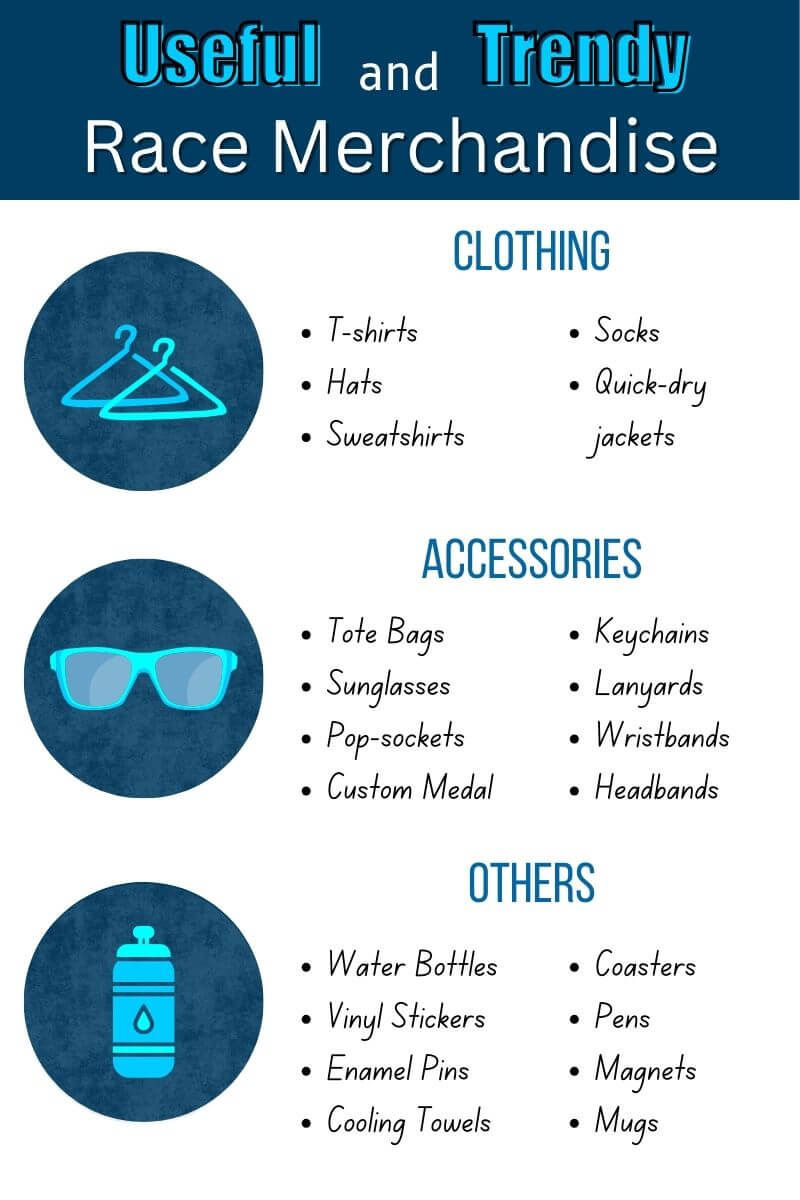
There are a lot of options out there for custom merchandise and promotional products. T-shirts are the most popular choice for races, but there are other good products as well. Here are some versatile and reusable merchandise items that you can consider using:
-
T-shirts
-
Hats
-
Sweatshirts
-
Jackets
-
Running Socks
-
Water Bottles
-
Tote Bags
-
Sunglasses
-
Vinyl Stickers
-
Pop Sockets
-
Cups
-
Mugs
-
Coasters
-
Pens
-
Magnets
-
Keychains
-
Lanyards
-
Headbands
-
Wristbands
-
Cooling Towels
-
Phone Armbands
-
Compression Sleeves
-
Race Bib Holders
-
Custom Medals
-
Customizable Race Certificates
-
Finisher Photos
Don’t be afraid to get creative and come up with fun and unique items to give your participants. Any customizable item that represents your brand, fits your target audience, and is within your budget can be a good promotional product.
3. Design Merchandise that You Would Want to Use
Designing compelling merchandise can be difficult, especially if this is your first time selling promotional products. It might be a good idea to hire a graphic designer to make appealing and cohesive designs for your merchandise. Many T-shirt and merchandise companies even offer their own design services that you can use.
Whether you’re designing your merchandise on your own or having someone else do it for you, your design needs to look as good as possible. The best rule to follow when designing your merchandise is to make something that YOU like! If you wouldn’t want to use your own product, chances are, neither will your participants.
We might not all be artists, but we can all tell a good design from a bad one. So, when making your product, stop and ask yourself if you would buy it as a participant. Your own opinion can be your most useful design tool!
You can also ask a friend or a colleague for an extra opinion. If you’re designing a T-shirt for your race, find another runner and ask them what they think. You’ll be surprised how helpful it can be to get some constructive feedback.
4. Align Your Design with Your Brand
In order for race merchandise to be effective, your design needs to be coherent with your brand. The purpose of making and selling merchandise is to make people remember your event and spread the word. The best way to do this is to sell products that tell people about your race first and foremost.
When people see your merchandise, they need to recognize it immediately. Your design should tell people what your race is about and make them want to join in on the fun.
This can be done by incorporating your logo or brand name, using your brand colors, or coming up with a catchy slogan. This will align your merchandise with your brand and bring more people to your race.
5. Decide Which Products are Included with Registration
You can give out merchandise to all of your participants or make it available for an extra fee. Make it clear during registration whether every runner will receive a T-shirt or medal, or if they have to be purchased separately. Some people expect certain items to be included with their registration fee, so it’s good to keep your audience in mind.
A person’s commitment to finishing your race is often a good indicator of their willingness to purchase merchandise. For example, if you’re organizing a casual fun run or small community event, it might be more beneficial to give out T-shirts to all of the participants. For a larger, higher-stakes race such as a marathon, people are more likely to purchase merchandise. Committed runners are usually more interested in purchasing merchandise to commemorate their accomplishments.
6. Sell at Key Moments
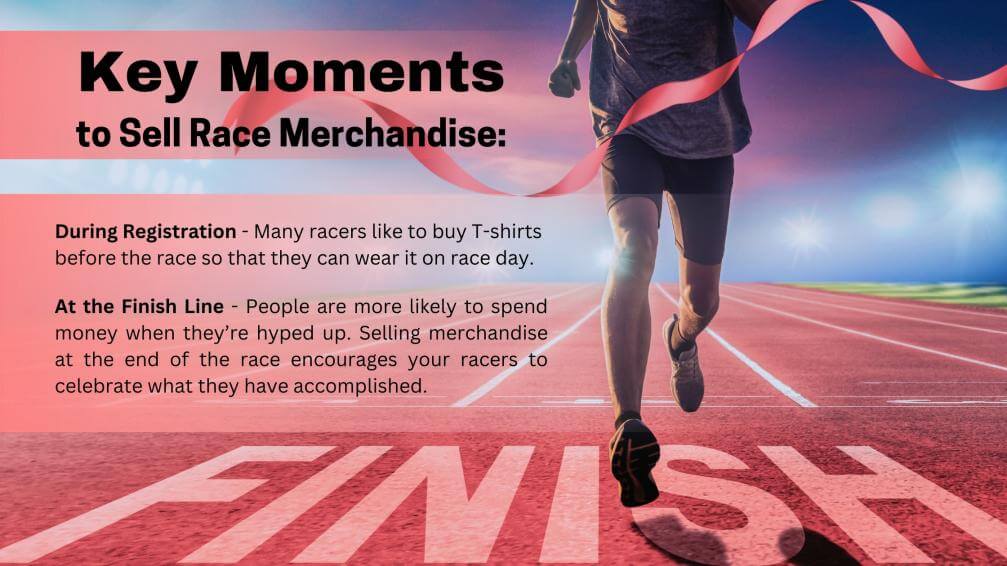
People’s willingness to purchase merchandise largely depends on their excitement about your race. The peak of this excitement occurs during two key moments: when participants register and when they finish the race. These are the times when runners are most eager to commemorate their experience, making them prime opportunities to offer products. This is why many races merchandise either during registration or at the finish line.
To maximize sales, consider offering your products both online and in-person, tapping into excitement before, during, and after the event.
Feature Merchandise in Your Registration Form
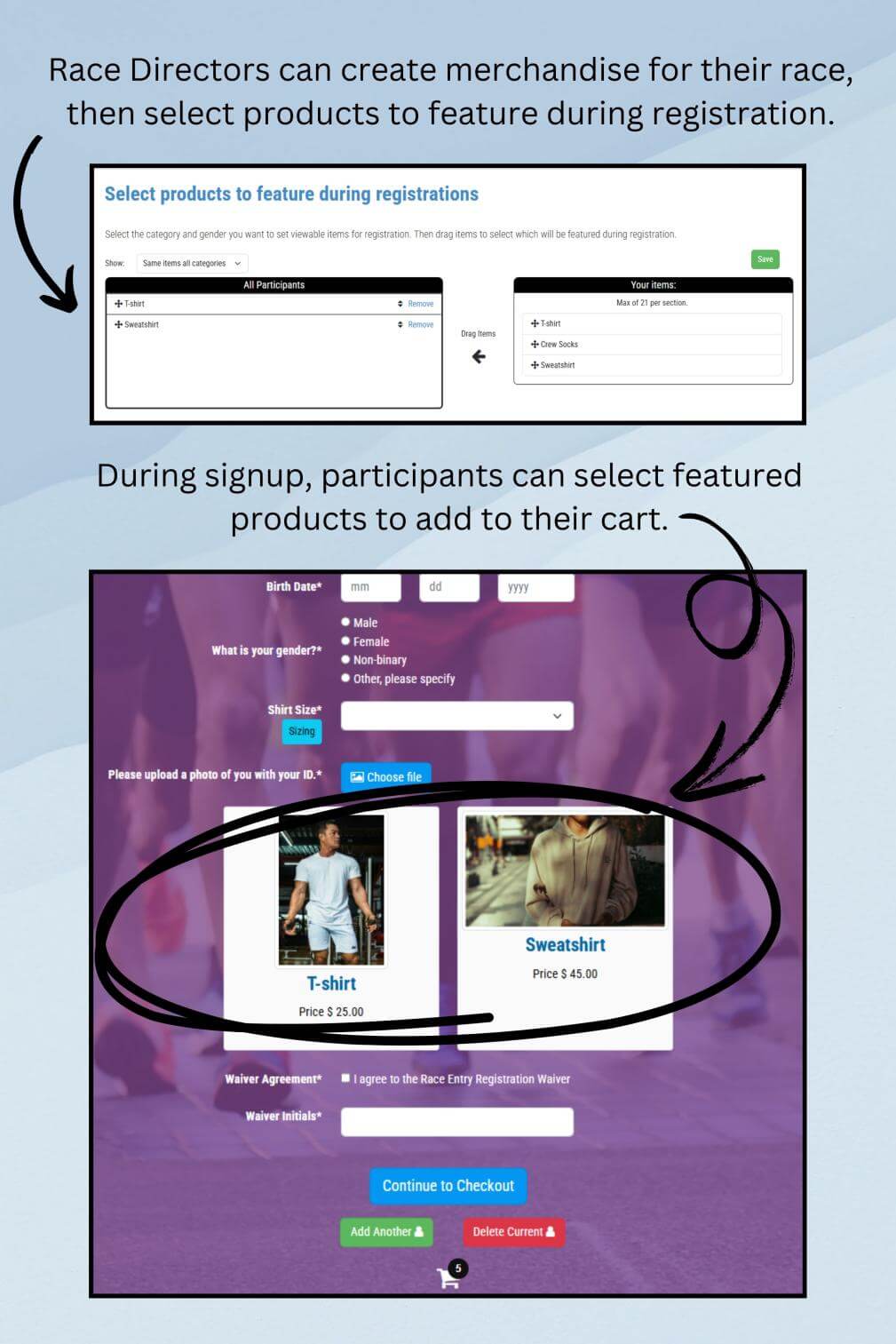
One of the most effective ways to boost merchandise sales is by offering products directly through your online registration form. When participants sign up for your race, you can give them the option to purchase merchandise at the same time. This simplifies the process for both you and your runners by consolidating everything into one seamless transaction. For participants, buying merchandise during registration is convenient, eliminating the need for a separate purchase later. Plus, selling products in advance allows you to estimate demand and plan your inventory accordingly.
With Race Entry, managing and selling merchandise is easy. Once you've created your products, you can select which items will be available for purchase during registration. As runners sign up, they'll be given the option to add merchandise to their cart, streamlining the entire process for both you and your participants.
7. Offer Exclusive and Customizable Items
The more unique your merchandise, the easier it will be to sell. Offering high-value or custom items can help set your event apart.
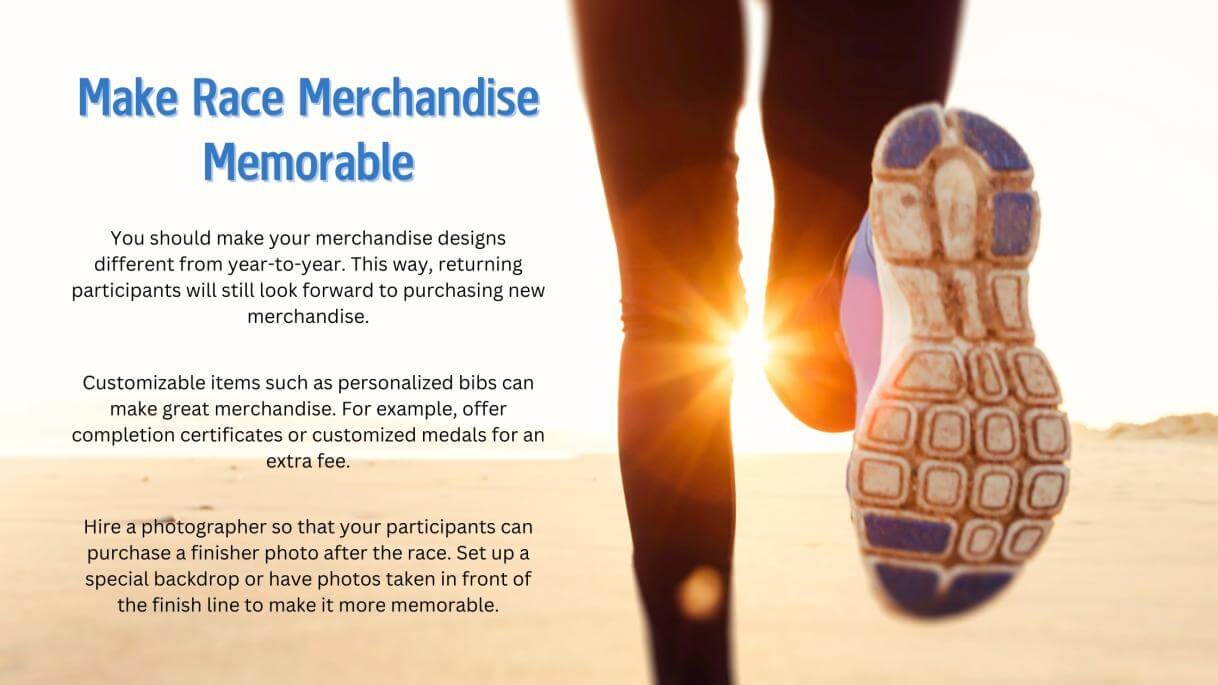
For many athletes, collecting merchandise from races they participate in can be a big deal. Making your merchandise unique every year makes it even more exciting for returning runners to buy your products.
Items with sentimental value are more likely to resonate with buyers, which is why customizable products are such a strong marketing tool. Personalized merchandise—such as engraved medals or race completion certificates—tend to be more popular than generic items, and you can even charge an additional fee for customization.
You can also consider selling something personal like a finisher photo at the end of the race. This is a way that you can charge a fee for extra services for a professional photographer. It also gives participants something that they can keep as proof that they finished.
Creating successful race merchandise relies on tapping into the passion and dedication of your runners.
By offering products that combine functionality, style, and performance, you amplify their sense of achievement. Well-designed merchandise becomes more than just a souvenir—it strengthens your connection with participants and encourages them to return year after year.
With the right approach, race merchandise can increase revenue while providing runners with meaningful keepsakes that remind them of their memorable race experience.