Financial Forecasting for Race Directors
Forecasting for Race Directors Contents
Financial forecasting helps ensure your race’s financial success. Of course, your participants care that you’re offering a great experience, but you can’t provide that great experience if the numbers don’t work.
We’re going to cover what you need to know so you can make the numbers work for your race:
- Forecasting for Race Directors
- Monthly & Weekly Cash Flow Analysis for Race Directors
- Financial Analysis Software Tools for Race Directors
With this information, you’ll be able to build your race’s financial success and create a great race.
Forecasting for Race Directors
Create a forecast each year for your race. Your forecast is the target amount of revenue you plan to generate with your race.
You’ll make this estimate by looking at your sponsor deal rates, registration fees, and any merchandise you plan to sell. Estimate how much you’ll sell, and that’s your revenue forecast. If you’ve been organizing your race for more than one year, you can reference your past revenue numbers to make your forecast for this year.
You also need to make sure that your target revenue is enough to cover your expenses. If it’s too low, you need to sell more, find cost savings, or raise your rates.
To figure out whether your race will be profitable, consider all of your costs:
- Permits
- Shirts
- Medals
- Timer
- Port-a-potties
- Barriers
- Tents
- Mile markers
- Marketing
- Labor
- Rent
- Aid station supplies
- Finish line snacks
Your forecasted revenue should exceed your operating costs – you want to make a profit, after all.
Once you have your revenue forecast, you need to make concrete plans for how you’re going to reach it. So, answer the following questions:
- How much sponsor revenue will you generate?
- How much registration revenue will you generate?
- If you’re selling race merchandise, how much merchandise revenue will you generate?
Once you’ve done your forecasting for the year, start setting your monthly and weekly targets to help you stay on track for your forecasted revenue. Each month may have different revenue goals or you may keep your revenue goal the same but the revenue source may vary.
For example, you may focus your efforts almost entirely on sponsor revenue in the first 6 months before your race. In the last 6 months leading up to your race, you may shift your focus almost entirely to registration revenue.
Once you’ve finished forecasting, review your progress weekly and monthly. If you’re falling behind, make a plan to address the gap. Maybe you need to reach out to more businesses about sponsorship or you need to do more follow up with the businesses you’ve talked to. Maybe you need to try a different approach with your marketing to get more people signed up.
Learn "4 Ways to Make More Money from Your Race."
Monthly & Weekly Cash Flow Analysis for Race Directors
Because your race’s cash flow can be highly variable depending on when people sign up and what kind of sponsor deals you close, you’ll need to have a strong sense of your cash flow each month:
- Review money spent and money gained each month.
- Check spending to ensure a positive cash flow.
- Project what payments are due in the next week, month, and after race day.
- Set aside funds early for those coming expenses.
Use our Race Director Cash Flow Analysis Template to help you conduct your cash flow analysis.
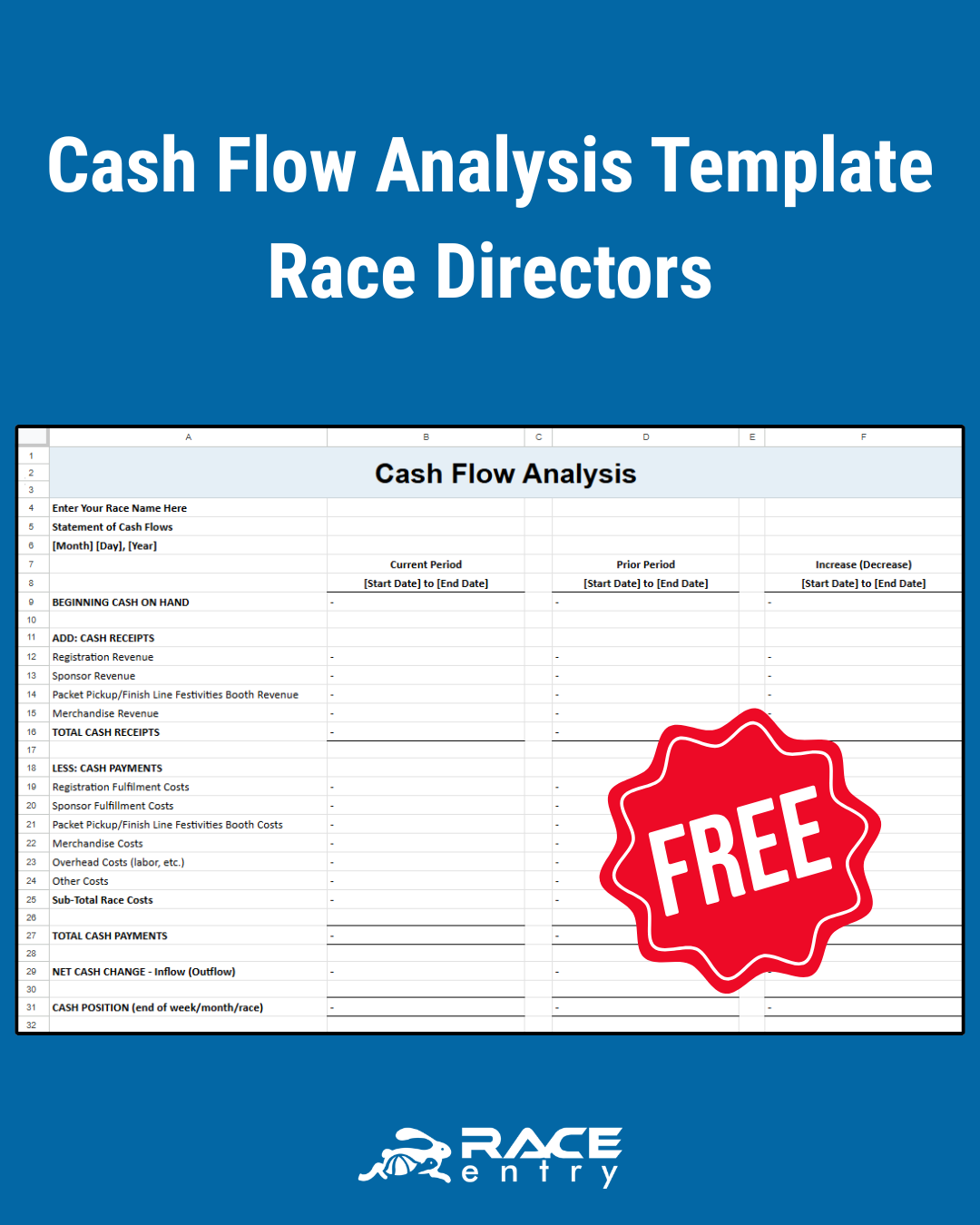
Review how much money you spent and how much revenue you gained each month. It’s especially important that you maintain a positive cash flow each month leading up to the race since some of your biggest bills come due after race day. Remember that cash in the bank is not profit until all expenses have been paid.
Pay close attention to when your bills are due and how much they are. Because of how a race is structured, some of your bills are going to come after your race when you are done generating revenue for that race year. Start setting aside cash early for those later expenses.
As race day draws closer, consider analyzing your cash flow weekly to track late registration revenue and your spending as payments come due.
You’ll also want to choose a race registration platform that offers regular fund disbursements so you can meet your financial obligations. Race Entry offers bi-monthly disbursements via check or direct deposit to race directors so you can be confident that your revenue will be there when you need it.
Financial Analysis Software Tools for Race Directors
Race Entry offers financial reporting tools designed for race directors:
- Forecasting
- Overall Race Revenue Breakdown
- Median Order Stats
- Real-time Financial Statements
- Direct Deposit Reports
- QuickBooks Integration
With these financial reports and tools, you’ll be able to ensure your race’s financial success each year.
1. Forecasting
Forecasting helps you predict your race revenue each year. This prediction tool helps you identify and prevent financial problems for your race.
Using your data from previous years, enter the total revenue you estimate generating this year.
Our system automatically tracks all revenue processed through our system – sign ups, sponsor payments, expo booth sales, product sales, and donations. You can add any additional revenue managed outside of our system by hand. Tracking actual revenue in real-time helps you know if you’re on track to hit your forecasted revenue.
You’ll also add your budget and all of your expenses to your forecasting report. You can look at your spending report to do a budget vs. actual analysis in real time.
Reviewing this information side-by-side, you’ll know if you’re currently generating enough revenue to cover your expenses. You’ll also know where to focus your revenue generation efforts – sell more registrations or close more sponsor deals.
2. Overall Race Revenue Breakdown
You can also see a summary of your overall race revenue – your race’s portion, marketplace tax, sales tax, the online fee, and the total collected through our system. This quick summary helps you understand your overall revenue, the marketplace sales taxes we’ve paid on your behalf, and any sales tax you need to pay for cash or check orders.
3. Median Order Stats
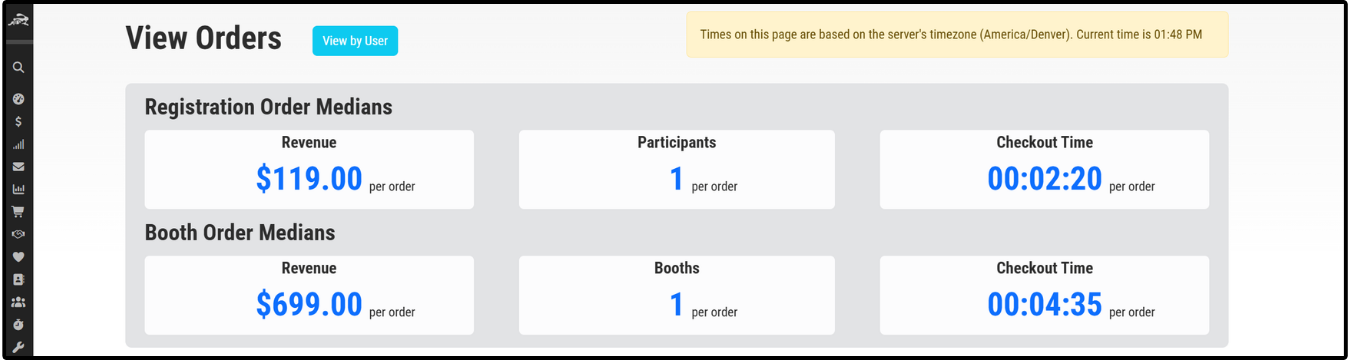
You can also get granular data on your typical order with median order stats:
- How much revenue does each order represent?
- How many registrations or booths are in a typical order?
- How long does it take for people to finish checking out?
Median stats are a better representation of your typical order than average stats. An abnormally large order would throw off your average, so it would no longer be a reliable representation of your typical order.
3. Real-time Financial Statements
You’ll benefit from real-time financial statements that you can use to reconcile your bi-monthly revenue disbursements and understand your cash flow. This report also updates in real-time, so you can keep a close eye on registrations, booth sales, fundraising, product sales, sponsor payments, and more.
4. Direct Deposit Reports
You’ll receive an email notification when we’ve processed your direct deposit. If you want additional information, you can create custom reports that are also emailed to you with each direct deposit.
5. QuickBooks Integration
Race Entry also offers an integration with QuickBooks online, which makes it very easy to manage your financial reports if you’re already using QuickBooks.
If you’re using the desktop QuickBooks app, you can easily download your data from Race Entry to add to your desktop QuickBooks app.
However you’re using QuickBooks, it’s easy to get all of the information you need to run your financial reports with Race Entry’s integration and downloadable report data.
Learn more about all the real-time data and reports that Race Entry offers.