9 Strategies for a Successful 5K Race Fundraiser
1. Make Giving Part of the Registration Experience Contents
- 1. Make Giving Part of the Registration Experience
- 2. Set Clear Goals and Make them Visible
- 3. Give Supporters Their Own Space to Contribute
- 4. Leverage Email and Social Media Throughout the Campaign
- 6–9 Months Out — Build Awareness
- 3–6 Months Out — Open Registration and Launch Fundraising
- 1–3 Months Out — Build Momentum
- Final 2–4 Weeks — Create Urgency
- Post-Race — Keep It Going
- 5. Recognize and Reward Your Top Fundraisers
- 6. Use Built-In Nonprofit and Charity Fundraising Tools
- 7. Remove Barriers with “Run For Free” Incentives
- 8. Partner with Nonprofits and Community Organizations
- 9. Keep the Momentum Going Beyond Race Day
- Building a Culture of Giving
By Raquel Oaks
A 5K race is more than just an event, it’s an opportunity to bring people together around a cause.
Whether you’re supporting a nonprofit, a local initiative, or a larger mission, a well-planned fundraising strategy can turn your race into something truly impactful.
But successful fundraising doesn’t happen by accident. It requires intention, structure, and the right approach to engage participants before, during, and after race day.
Here’s how to build a fundraising strategy that not only meets your goals, but exceeds them:
1. Make Giving Part of the Registration Experience
One of the simplest and most effective ways to increase donations is to meet people where they are.
When participants are registering for your race, they’re already: engaged, excited, and ready to commit. This moment is the perfect time to introduce giving!
- Offer a donation option directly during registration.
- Keep it simple and easy to complete.
- Suggest donation amounts (e.g. $10, $25, $50) to guide decisions.
With Race Entry's software, you can seamlessly integrate donation options into your checkout process, making it easy for participants to contribute without any added steps. Small optimizations like this can significantly move the needle on total funds raised.
2. Set Clear Goals and Make them Visible
People are far more likely to give when they feel like they're contributing to something meaningful — and nothing makes a goal feel more real than seeing progress toward it in real time.
A vague goal doesn't inspire action. A specific, visible target does. Before your race opens for registration, set a concrete fundraising goal and share it early and often. As donations come in, show your progress publicly.
When participants can see how close you are to the finish line, it creates momentum. Progress encourages participation, and often sparks a final push of contributions as people rally to help you cross that threshold.
Race Entry allows you to set fundraising goals and display real-time progress, helping motivate participants and donors as they watch their collective impact grow. To maximize urgency, try these proven techniques:
- Countdown timers: "3 days left to donate!"
- Progress callouts: "We're 70% to our goal — help us get there!"
- Social media pushes timed to key deadlines
- Consistent donation link sharing across email and platforms
3. Give Supporters Their Own Space to Contribute
Not everyone who wants to support your cause will register for the race — and that's okay. If donating feels disconnected or difficult for non-participants, you'll miss out on a significant portion of your potential donor pool.
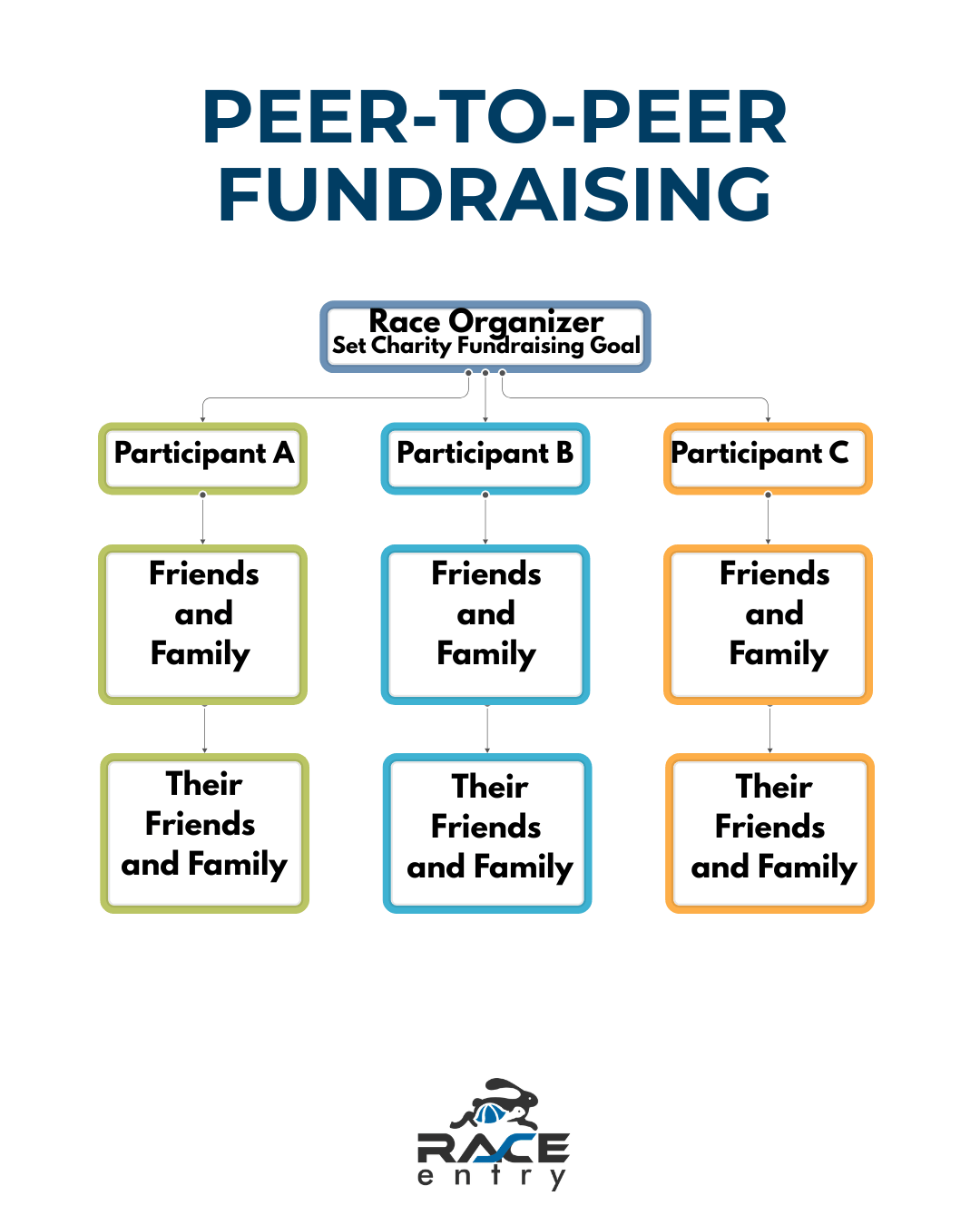
Peer-to-peer fundraising pages are one of the most powerful tools available to race organizers. When individual participants create their own personal fundraising pages and share them with friends and family, your reach extends far beyond your registered runners. Research consistently shows that people are more likely to donate when asked by someone they know.
- Create dedicated, shareable donation pages for each participant
- Allow supporters to contribute without registering
- Encourage participants to share page via text, email, and social media
This expands your reach beyond participants and opens the door for friends, family, and community members to get involved.
People don’t give to abstract ideas, they give to stories. Clearly share who the funds help, show the real impact, and use emotion not just information.
4. Leverage Email and Social Media Throughout the Campaign
Your fundraising strategy shouldn’t live only on your race registration page. Email and social media are essential channels for keeping momentum alive from the day registration opens to well after the finish line.
For email, consider a pre-race sequence:
6–9 Months Out — Build Awareness
- Announce the event on social media and begin growing your audience with an event page or hashtag
- Send an initial email to past participants and donors introducing the event and your fundraising mission
- Share behind-the-scenes content as you work through permitting and planning — it humanizes your organization and starts building anticipation
3–6 Months Out — Open Registration and Launch Fundraising
- Send a dedicated registration launch email with a clear call-to-action and a link to your fundraising goal.
- Introduce your fundraising goal publicly and begin sharing progress updates on social media.
- Encourage early registrants to set up their personal fundraising pages and share them with their networks.
- Post participant spotlights to show real people and real stories connected to the cause.
1–3 Months Out — Build Momentum
- Send a mid-campaign email with a progress update: how close are you to the goal, and what happens when you get there?
- Run a social media challenge or incentive — offer a small perk like race merchandise or early bib pickup to participants who share their fundraising page publicly.
- Launch a branded event hashtag and encourage participants to post training updates and tag your organization.
- Share donor stories or impact statements to reinforce why contributions matter.
Final 2–4 Weeks — Create Urgency
- Send a countdown email series: three weeks out, one week out, and a final-day reminder.
- Highlight your progress publicly — "We're 80% to our goal, help us get there!" — to create a sense of shared momentum.
- Post daily on social media in the final week, mixing donation links with participant content and race-day previews.
Post-Race — Keep It Going
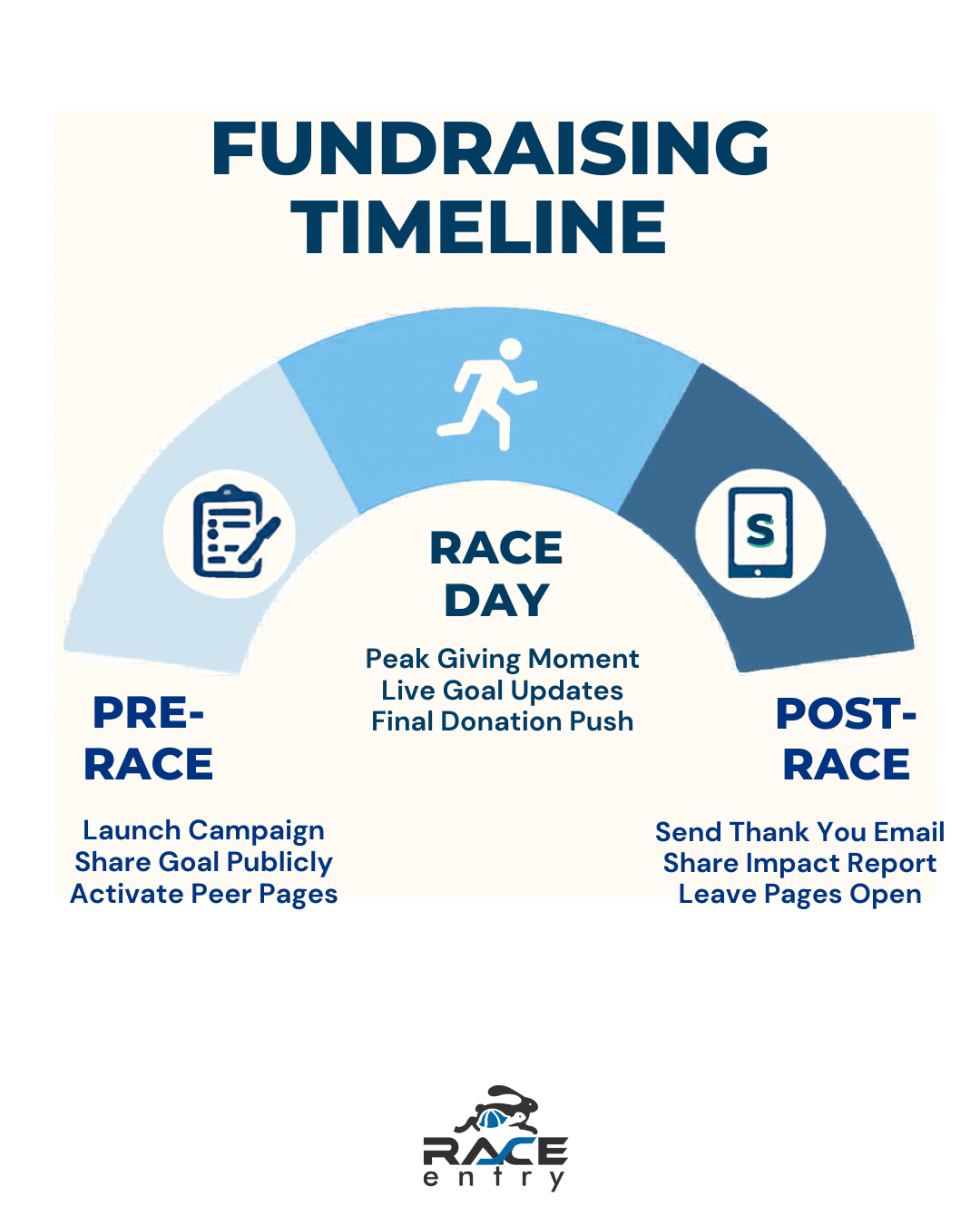
- Send a thank you email within 24 hours that celebrates what was raised and who it helps.
- Share a post-race social recap with photos, final fundraising numbers, and a donor appreciation message.
- Leave donation pages open for 1–2 weeks and include a final giving link in your post-race communication.
On social media, build community around a branded event hashtag. Encourage participants to post their training updates, share their fundraising pages, and tag your organization. Consider offering small incentives- like race merchandise discounts or early bib pickup, for participants who share their fundraising page publicly.
Consistent, multi-channel communication keeps your event top of mind and your donation links circulating long after the initial registration buzz fades.
5. Recognize and Reward Your Top Fundraisers
Gamification is a proven driver of fundraising performance. When participants can see how they stack up against others — and when there's a reward for going the extra mile — they're naturally motivated to push their fundraising further.
Consider building recognition into your event strategy:
- Display a live leaderboard on your race website or registration page
- Give shoutouts to top fundraisers on social media throughout the campaign
- Offer perks like priority corral placement, free race photos, or branded swag
- Recognize top fundraisers publicly at the finish line or awards ceremony
Even small gestures of recognition go a long way. When participants feel seen and celebrated for their fundraising efforts, they're more likely to participate again the following year — and bring new donors with them.
6. Use Built-In Nonprofit and Charity Fundraising Tools
Fundraising becomes much more effective when it’s structured and transparent.
Working with a system designed for nonprofit fundraising and charity fundraising ensures that donations are:
- Organized
- Trackable
- Easy to manage
Race Entry has built-in-tools that help you connect your race directly to your cause, making it simple to collect and manage donations without needing additional platforms. Directors can also add a separate payee for each partner nonprofit/ charity you work with. Which means we take care of getting the charity its funds so you don’t have to worry about it. Creating a smoother experience for both organizers and donors.
7. Remove Barriers with “Run For Free” Incentives
Registration cost can be a barrier for some participants — but it can also be a powerful fundraising opportunity. One of the most effective ways to simultaneously boost participation and donations is to connect the two directly.
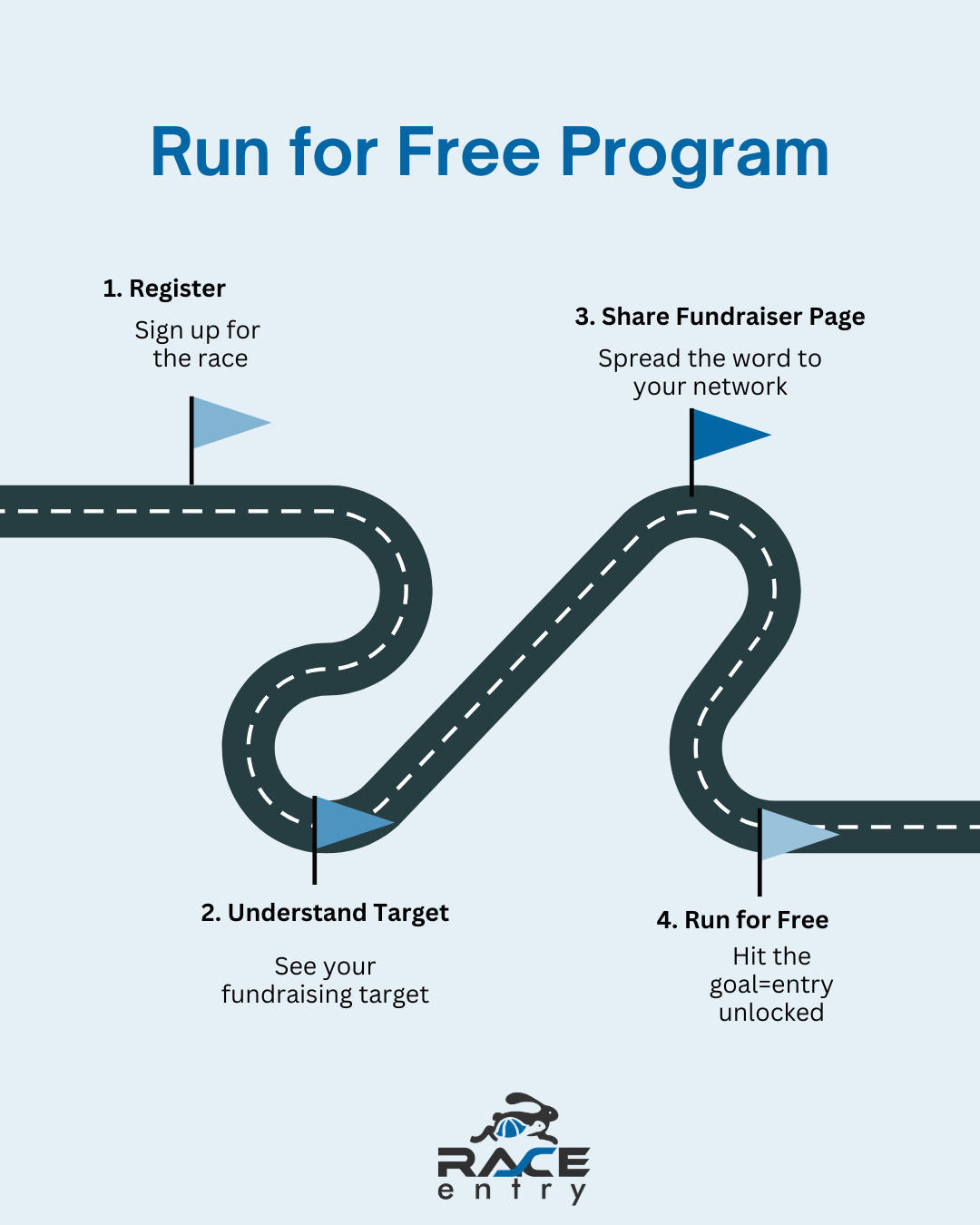
“Run For Free" programs allow participants to earn their race entry by hitting a fundraising threshold. Instead of paying a registration fee, they commit to raising a set amount from their personal networks. This approach:
- Increases participation by removing the upfront cost barrier
- Dramatically boosts total fundraising by activating new peer networks
- Creates highly motivated fundraisers with personal stakes in the outcome
Work with charities to build plans for “Run For Free” programs that will increase participation, and also boost total fundraising by encouraging individuals to actively seek donations.
While using Race Entry software you can also add another advantage to this strategy. The charities can also buy registrations at a discounted rate to reserve spots for their fundraisers. If a fundraiser doesn’t hit the fundraising target, there are two options:
- Races can charge the difference between what was fundraised and the fundraising target. The registration fee goes to the race. The difference between the fundraising target and what was fundraised goes to the charity. The card is charged for the registration fee.
- Race can charge the whole registration fee.
These options eliminate risk for the event and motivates the fundraiser.
8. Partner with Nonprofits and Community Organizations
Collaboration can significantly amplify your impact. When you align with established nonprofits or local organizations, you gain access to their existing audiences, built-in credibility, and additional promotional support. The nonprofit also has a mutual benefit of your audience and credibility. Creating a mutual partnership that can have a lot of impact.
The most productive partnerships are built on clarity and alignment. When approaching potential partners:
- Be specific about how the funds will be used and who they will benefit
- Choose organizations whose missions align authentically with your event's theme
- Offer partners visibility in your marketing materials and at the event
- Provide impact reports after the race to maintain trust for future collaboration
Strong partnerships build trust, and trust drives giving. A nonprofit co-sign signals to potential donors that their contributions will be handled responsibly and make a real difference.
9. Keep the Momentum Going Beyond Race Day
Fundraising doesn't have to end when the race does. In fact, some of the most impactful giving happens in the days immediately after the event, when emotions are high and participants are sharing their experiences.
To capitalize on post-race momentum:
- Leave donation pages open for 1–2 weeks after race day.
- Send a thank-you email to all participants and donors within 24 hours.
- Share a post-race impact report showing exactly how funds were use.
- Provide a sneak preview of next year's event to keep supporters engaged.
When supporters see the tangible difference their contributions made, they're far more likely to stay engaged, donate again, and bring new participants to your next event. Use your post-race analysis to understand when donations happened, which channels performed best, and where you can double down the following year.
Building a Culture of Giving
The most successful fundraising races don't just focus on transactions — they build connections. They create an experience that participants want to be part of year after year, not just because the race is fun, but because it stands for something.
When your fundraising strategy is intentional and supported by the right tools, you can:
- Increase total donations through integrated, frictionless giving
- Simplify management with organized, trackable fundraising systems
- Engage your community more effectively across every phase of the event
- Build relationships that extend well beyond a single race day
With Race Entry's integrated platform — from donation options at checkout to real-time goal tracking to peer-to-peer fundraising tools — you have everything you need to bring these strategies to life in a way that feels seamless for both organizers and participants.
The most impactful 5Ks aren’t the biggest ones -- they’re the most intentional ones.