How to Organize a Bike Ride
By Leigh Owens
There are many reasons why forming a group bike ride is a great idea. Some of the benefits include
- Promoting health
- Social opportunities
- Promoting your club or organization
- Fundraising opportunity
- Sightseeing and becoming more familiar with an area
However, organizing a bike ride requires managing a lot of logistics. The larger the ride, the less you can do on your own. You will need to look to many places for support and you will need months upon months to plan.
Before you start, make sure you have a clear purpose in mind for your ride. Is this promotional for your own business or club? Is this a fundraiser, and for what cause? Is this recreational?
Now that you have a clear goal, you can start thinking about scope and logistics. A recreational ride will likely need to be on the smaller side. A fundraiser is better able to attract volunteers and sponsors.
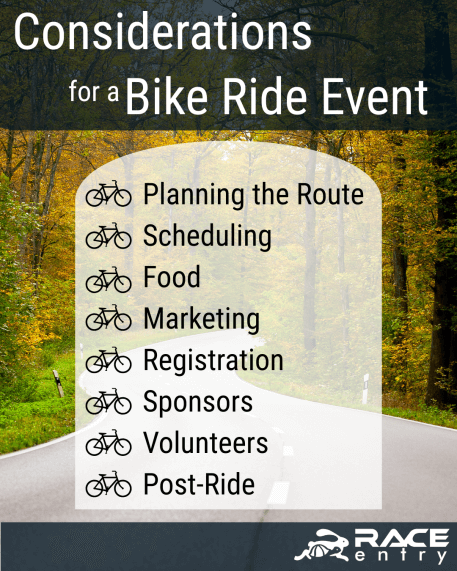
No matter what your motivation, you will need to consider the following factors:
Plan the Route
One of the most critical parts of a bike ride is planning the route. If you are already familiar with the area where you want to have the ride, this may seem like an easy task, and it will be easier for you, but there are several things to consider:
- Terrain of the roads used
- Traffic flow of cars on roads
- Hills and elevation
- Scenery
- Availability of restrooms
- Local businesses
- Accessibility
If you are planning a multi-day ride, you will also need to consider accommodations for overnight stays.
There are many apps that can help you plan a bike route, some of which are free and some are not. For example, Epic Road Rides offers a route-planning guide. Not all apps take into account elevation and traffic safety.
When considering terrain, consider what kinds of cyclists you hope to attract to your event. If they are going to be using road bikes, choosing trails that would require a mountain bike to easily traverse is not a good choice.
Likewise, if you want to invite casual cyclists, very long trails or trails with very much elevation will be more of a challenge than they’re likely to enjoy. You will want to communicate elements like elevation to your potential participants.
The scenery you pick for your trail will be a notable part of the draw of the ride. This should not just be beautiful scenes to pass by. You need to be planning time for the cyclists to be able to stop and smell the roses.
Scenery can include nature, but might also be historic sites and buildings, or other attractions such as a museum and other stopping locations. Consider your rest stops in accordance with other attractions.
Your rest stops should also consider the availability of bathrooms and local businesses. Local businesses can themselves be an attraction, and bringing cyclists to them is a form of supporting the community. You also have a better chance of gaining any form of sponsorship from those businesses if you can offer them a location as a rest stop.
Finally, your route needs to consider accessibility. This is partially ensuring the right bikes for the right trails, but also the ability for help and assistance to reach cyclists if necessary.
If your cyclists are trekking through large tracts of wilderness, can a repair truck reach them if their bike breaks? What about emergency medical services?
Parallel to the issue is making sure you can get the right permits for where you want your route to go. Most public land will require you to get a permit. If you are unable to acquire the legal permission you need to use the land, the land is inaccessible to you.
Once you have the route planned, you need a way to distribute it to your cyclists. You’ll need to provide them with a cue sheet. The quality of your cue sheet is a break or make it element for your ride. If cyclists struggle to understand the map and cues, they will not want to return.
Scheduling
While you can’t predict the weather the day of the event, you can predict the overall weather of the timeframe. If you pick a week in the height of summer, you can predict that it will be extremely hot during midday and water is going to be a bigger concern than usual regardless of the time.
Pick a season that makes sense for your cyclists’ enjoyment. However, you will also need to consider what else is happening in the same timeframe. If you are trying to run a fundraisers, other major fundraisers will compete with you. And major sporting events or parades can cause issues with congestion or other street unavailability.
However, sometimes other events can work for you. If a local festival is already drawing people to your area, you can complement each other by doubling up the attractions with your bike ride.
You will also want to check if there are any laws or rules with city permits that would affect your scheduling.
Whether or not you want to have a single day event or a multi-day event will affect your scheduling. You will usually want to start cyclists off earlier in the morning to avoid the greatest heat in the day regardless.
Food
Cycling burns a lot of calories, especially in the case of more dedicated cyclists. The more casual the cyclist, the more of a bonus food is. But serious cyclists will expect it in abundant supply.
Food is one of the primary donations you will need to seek from sponsors. If your bike ride is meant to be small and recreational, it may suffice to make sure your trail ends near a restaurant. Make sure you make a reservation in advance.
In the case of a larger event, you may be able to make reservations at restaurants for your participants. However, free food is a big draw for bike rides, so you will not want to rely on passing the costs to your participants every time.
You will need to ensure there’s some variety and that you can accommodate dietary needs. This could include vegans and vegetarians and religious dietary restrictions, as well as allergies and intolerances.
Providing variety will provide much better rapport with your participants than the same meal each rest stop. If you are working with a sponsor who is prone to one type of food only, see what you can do to bring in variety.
You can also give your cyclists snacks, best sourced from sponsors. Can a local sports store give you energy and protein bars to give to your participants? What about a grocery or bulk store?
Food is as great a factor in how your participants will remember your ride as the scenery they get to enjoy while cycling.
Marketing and Registration
You will need to plan a big cycling event possibly years in advance. You can begin marketing for it as soon as you have your route confirmed, while you are still ironing out other details such as sponsors or catering.
Creating and using available mailing lists is one excellent way to begin notifying people of the bike ride. Posters and flyers, using available local news sources, and utilizing the resources of local bike shops and rentals is also a good idea.
When you are marketing your ride, you will want to highlight what makes your ride unique. This will likely include specific elements of the scenery. However, it could also include specific challenges, such as riding up every hill in the area.
Ask yourself why someone should sign up for your ride instead of any other. What would make your ride a special experience for them? Put that on your marketing.
Once you start to get interest, you’ll need an easy way for people to register. Because you will begin marketing so far in advance, it would be wise to use pre-registration discounts and tiered pricing as you arrive closer to the date of the ride.
Offering group discounts and varied prices for club members or youths if applicable is also a useful tool.
Keeping track of all of your marketing information and prices is one of the aspects of a bike ride you cannot do alone. Using a ticketing manager like Race Entry will take a huge load off your plate.
Race Entry makes different ticket prices, tiered pricing, pre-registration, bundles, and group pricing easy. You can also make use of its mailing list for easy communication with your registrants. Race Entry can simplify and organize the next three elements of a bike ride as well.
Sponsors
There are many overhead costs when running a bike ride. You will want to make sure you are keeping a budget and including every last possible element in that budget. Once you have it, see where you can ask sponsors for help.
Sponsors can, of course, donate money to your cause. However, both you and sponsors may benefit more if they donate resources. If a local grocer or restaurant or catering service provides the food, that’s free advertising for them.
Bike shops and rentals may be able to provide equipment or teams for on-site bike repair and promote their products and competency. What other branded equipment can benefit you and a sponsor? Are there goodies for a goodie bag you can give participants from sponsors?
Sponsors will require more than this to be interested. What other ways can you promote your sponsor? Will you offer them banners? Hand-outs? How will they benefit from partnering with you?
And how will you keep track of your sponsorship packages and who your sponsors are? This is where Race Entry comes in. Creating and offering sponsorship packages, and managing several aspects of sponsor promos is part of Race Entry’s services.
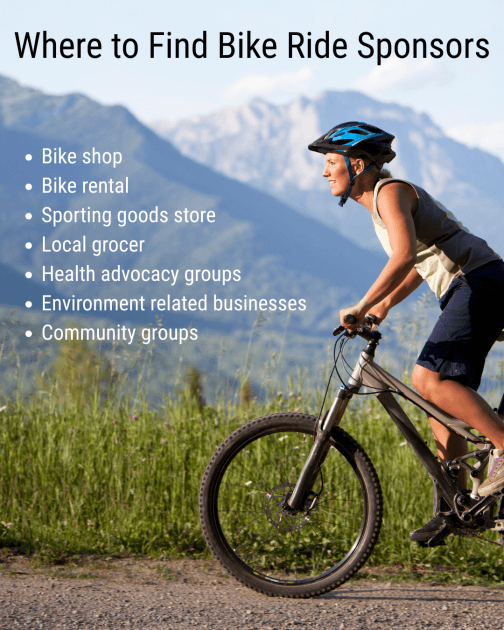
If you yourself are not a member of a club or organization for cycling, look into what groups exist that may be interested in supporting your ride. This may also include health advocacy groups.
If a local business is not interested in sponsoring your ride, make sure to still ask about group rates for food or lodging if appropriate.
A source of sponsorship you may not have considered comes from local governments. With a big bike ride comes an opportunity for a public official to find connection and good will with their constituents.
Consider inviting local officials to join your bike ride, or to write a letter of greeting to your participants.
Volunteers
The bigger your ride, the more volunteers you’re going to need. If you are a member of a club or organization, you will already have access to easy potential volunteers from other members of your group, but you will likely need more than that.
Where else can you source and attract volunteers? Consider where you can find people who are interested in cycling events. Ask your local bike shops and rentals, and see if you can post a call for volunteers at the sporting goods store.
While you may garner volunteers simply through people’s excitement for the bike ride, you will have more success if there are any perks to volunteering. If you represent a club or organization, perhaps you can offer a discount for membership to volunteers, for example.
Make sure to highlight how the bike ride will serve the community. If you are fundraising, you will want to remind your potential volunteers how their help will make a difference in that goal.
Once you have volunteers, you need a way to organize them and easily communicate with them. While you may consider walkie-talkies when on-site, email communications should suffice beforehand.
When you use Race Entry, you are able to make use of the volunteer manager Come Volunteer as part of the package. Come Volunteer makes organizing volunteers simple. You can easily assign jobs and communicate with volunteers when using this software. It’s just another way Race Entry strives for your success.
Post Ride
After the bike ride was enjoyed by all, do you have a plan for moving forward? If you want to repeat your event, you will need to start planning for it right away.
Start by cementing your goodwill. Send thank you notes to every volunteer and donor. Also send thank you notes to your sponsors and see if they would be interested in renewing their sponsorship to next year.
You will also want to release statistics to your participants. How many people participated? If you ran a fundraiser, how well did it do? If you can list an impact your ride had, do it.
Post event surveys are another to-do, and another way Race Entry can simplify things for you. Post event surveys are an effective way to determine what you can improve next time and get good suggestions.
However, they are only as effective as what you use. If your surveys all point to a common problem and that problem persists the next year, people will feel you are giving them lip service about their thoughts and will not attend again.
Once you have wrapped up everything for this year, review the data you received and determine your directions for the next. Race Entry will also have gathered demographic data for you, so you will have a lot to reference.