Create a Successful Loyalty Program for Your Race
Once you’ve had a successful race year, it’s time to start preparing for next year. As you get ready for year two, consider creating a rewards program to encourage your participants to return. A loyalty program can support your efforts to make your race a community tradition.
We’ll review common loyalty program approaches in the race industry, creating your loyalty program, and how to use Race Entry’s software to manage your loyalty program.
Loyalty Program Strategy
You can take a variety of approaches to your loyalty program. You can look at how many years someone has participated or how much distance they’ve covered participating in your race over the years.
Year-based Loyalty Program
With a year-based loyalty program, you can increase the reward based on the number of years someone has participated in your race. This approach is the simplest because you’re just counting years. So, if your race has several distances, it doesn’t matter which distances people have done so long as they’ve participated.
You’ll want to offer a percentage off with this discount since participants may opt for a new distance the next time they sign-up.
Mileage Club Loyalty Programs
Mileage clubs can take a little more work on your part. But, it can keep your most engaged participants coming back for more. These mileage clubs can even become someone’s goal that drives them to run or bike daily.
Make the goals achievable and challenging for your participants. For example, a mileage club for a marathon might start at 150 miles and have additional tiers above that with increased benefits.
Some benefits to consider are:
- Swag, like a shirt or jacket
- Pre-race dinner
- Plaque
- Recognition on your website and in your race guide
- Annual discount
- Early access
Loyalty Program Creation
Your loyalty strategy needs to target your race’s needs. After your first year, you have a good sense of your overall costs and what you want to work on for next year.
As you create and implement a loyalty program, consider your purpose, budget, develop, and advertise your program.
Purpose
A key principle of business is that it’s cheaper to keep customers than to find new ones. So, after all of the marketing effort you’ve done to gather participants for your first race, you want to keep as many of those people coming back to next year’s race.
And, that’s the primary focus of your loyalty program.
Now, what that looks like may be different when you look at specifics. For example, do loyalty rewards start after the first year, or do they start after the second year? These decisions will vary based on the kind of race you’re organizing. It can be easier to get people to do a fun run each year, while getting people to run a marathon again can be harder.
You may also have some secondary goals with your loyalty program. For example, your loyalty program may include special swag to further brand awareness and recognition for loyalty.
Budget
The next factor to consider is your budget. After your first year, you should know how much you spent on marketing per participant overall. You’ll also want to assess which marketing efforts were the most successful, and how much those cost per participant they yielded.
These data points will give you a sense of what your savings might be if you can keep a lot of your participants returning.
The other budgetary data point to consider is how much it costs to put on the race per runner, in other words – how much it costs to break even. And, in turn, you should understand what your profit margin is for each runner.
This information will help you know how high a discount it’s worth offering for loyalty.
Development
Now that you have all the information, start thinking about how much of a discount you can offer. One way to think about this calculation is considering the marketing spend that you won’t need to replace to capture repeat customers.
Another way to think about your discount ceiling is to consider your profit margin. As you’re looking at your profit margin, realize that each year of your race will be different. So, carefully consider your discount size.
As a general guideline, offering your maximum discount as 15-20% off is a good rule of thumb.
Next, consider when to start your loyalty program. After your first year, you have an advantage because you have all the emails from your first year’s participants. This contact information makes it much easier to market your race because you’ve built an audience.
Plenty of people will come back next year simply because they had a positive experience their first time. They may not need an additional incentive.
So, starting a loyalty program that starts kicking at three or five years may make the most sense in many cases.
If you’re taking the yearly approach, consider offering a 5 percent discount after three years, 10 percent after five years, 15 percent after seven years, and 20 percent after 10 years.
With the mileage approach, there’s additional prestige for participants. So, create higher thresholds. If you manage a marathon, maybe your mileage clubs start at 150 miles. So, someone would have to run your race at least six times to join the club.
Advertisement
Once you’ve determined how you’re approaching loyalty, the next step is getting the word out.
Start with adding a page to your website. Include information about your loyalty program – the requirements and benefits of the program. If you’re taking the mileage club approach, highlight the people who are members of your mileage club on this page.
Of course, send out an email to all of your past participants when you launch your program so they can get excited about it and earn their reward for loyalty.
Include details about your program in your race guide, especially if you’ve taken the mileage club approach.
Loyalty Program Management
Once you’ve determined what your loyalty program looks like, the next step is managing it. Management will look different depending on how you’ve decided to set up your loyalty program.
Year-based Loyalty Program Management
A year-based loyalty program is the simplest type of loyalty program to manage. All you need to know is how many years someone has participated in your race. Race Entry’s loyalty program feature makes it easy to email unique promo codes to all participants who meet your criteria.
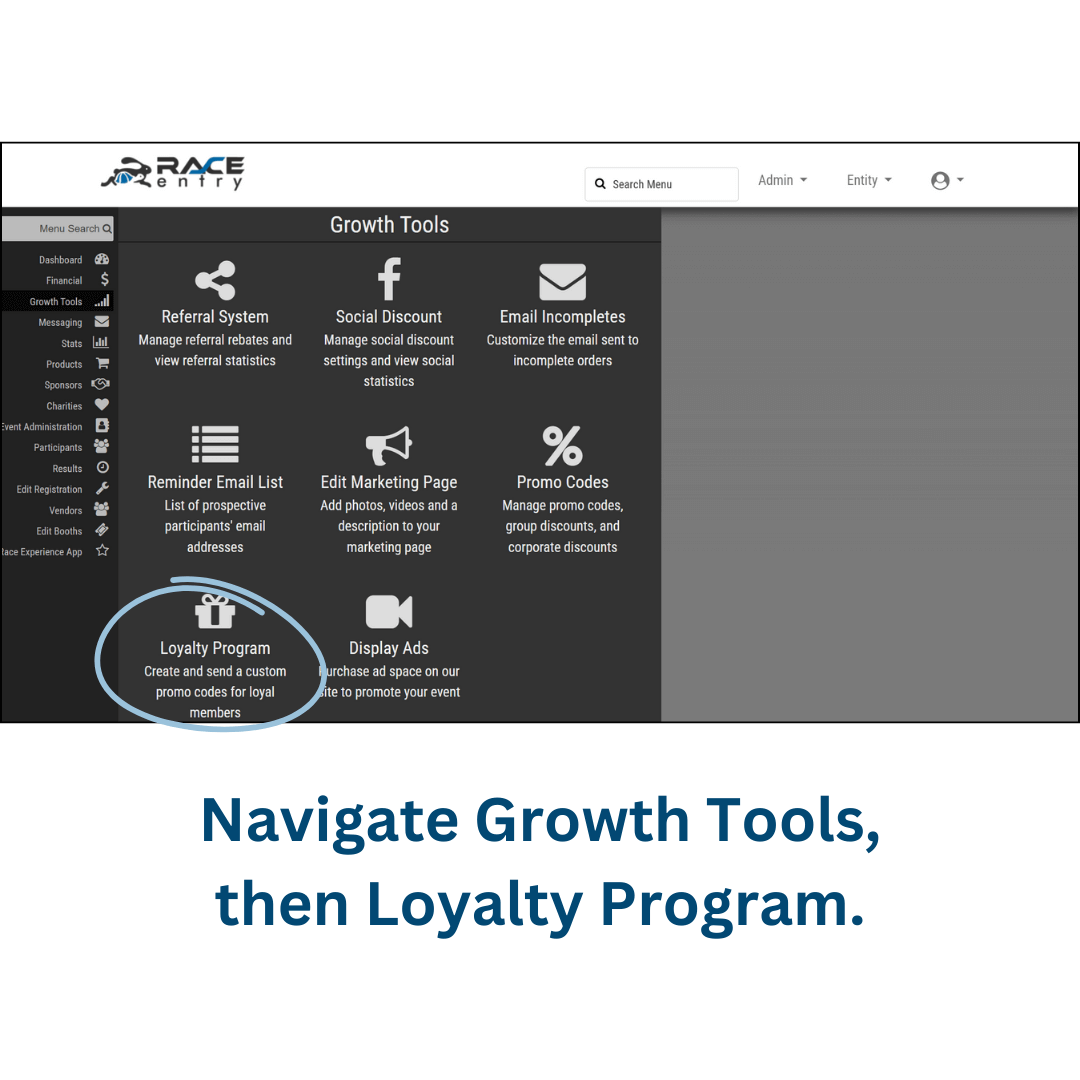
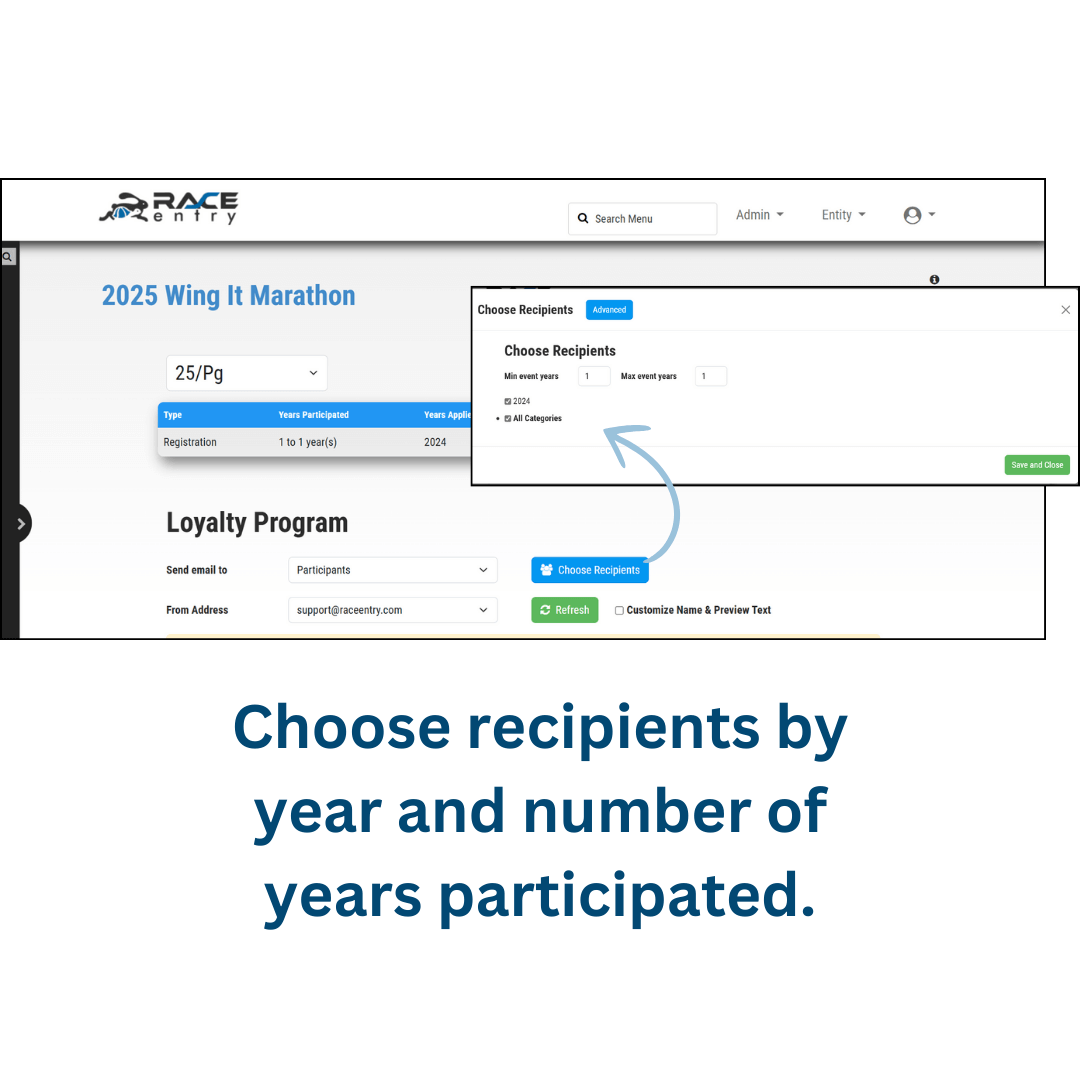
First, you’ll select the recipients. Select the number of years someone needs to have participated. Then, select which race years are eligible for the discount.
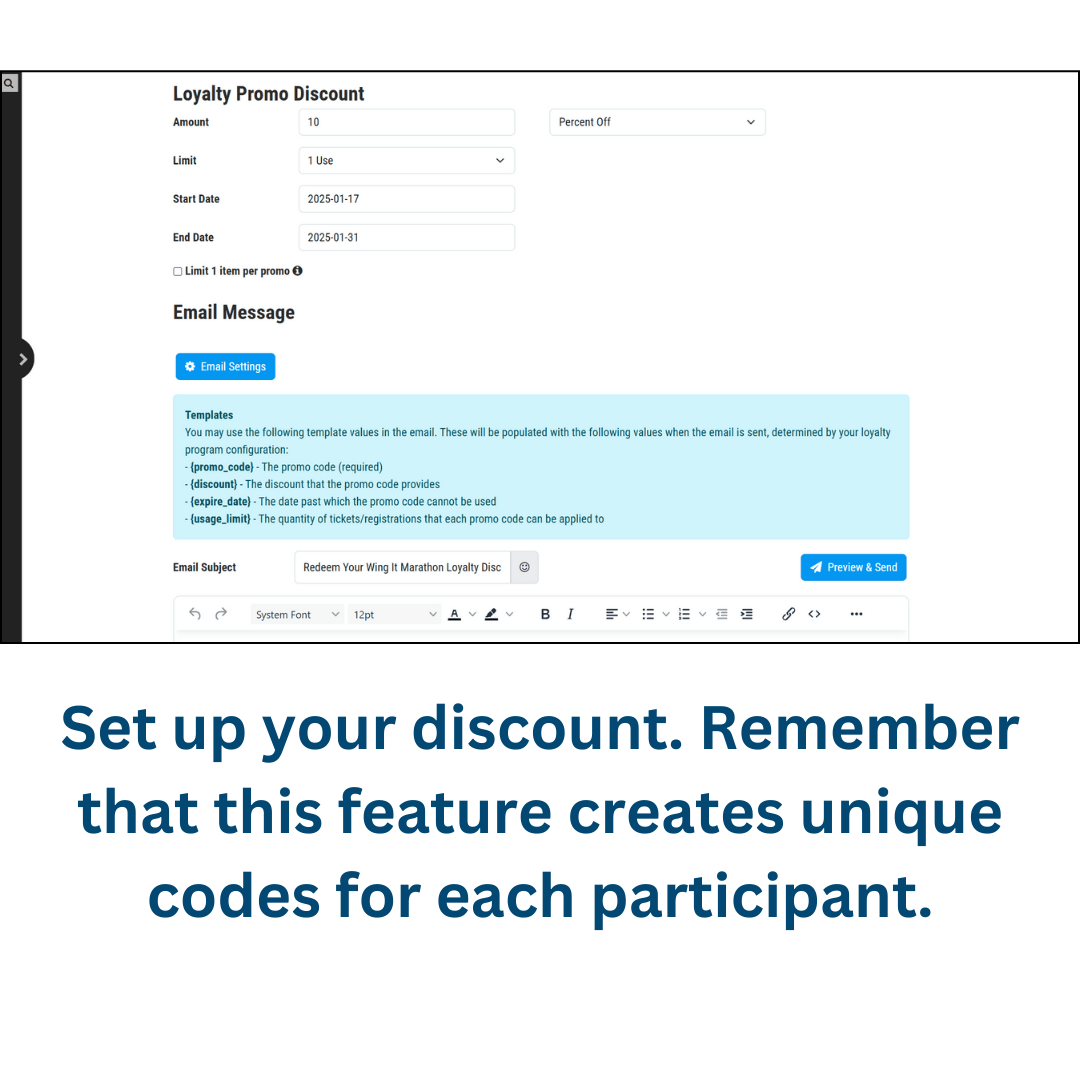
Next, set the discount you’re offering. In Race Entry’s loyalty program, the number of uses refers to the number of registrations the discount applies to. Keep in mind that the loyalty program feature creates unique promo codes for each recipient, so if you only want each person to have one registration discounted, you’ll want to set the discount as “1 Use”.
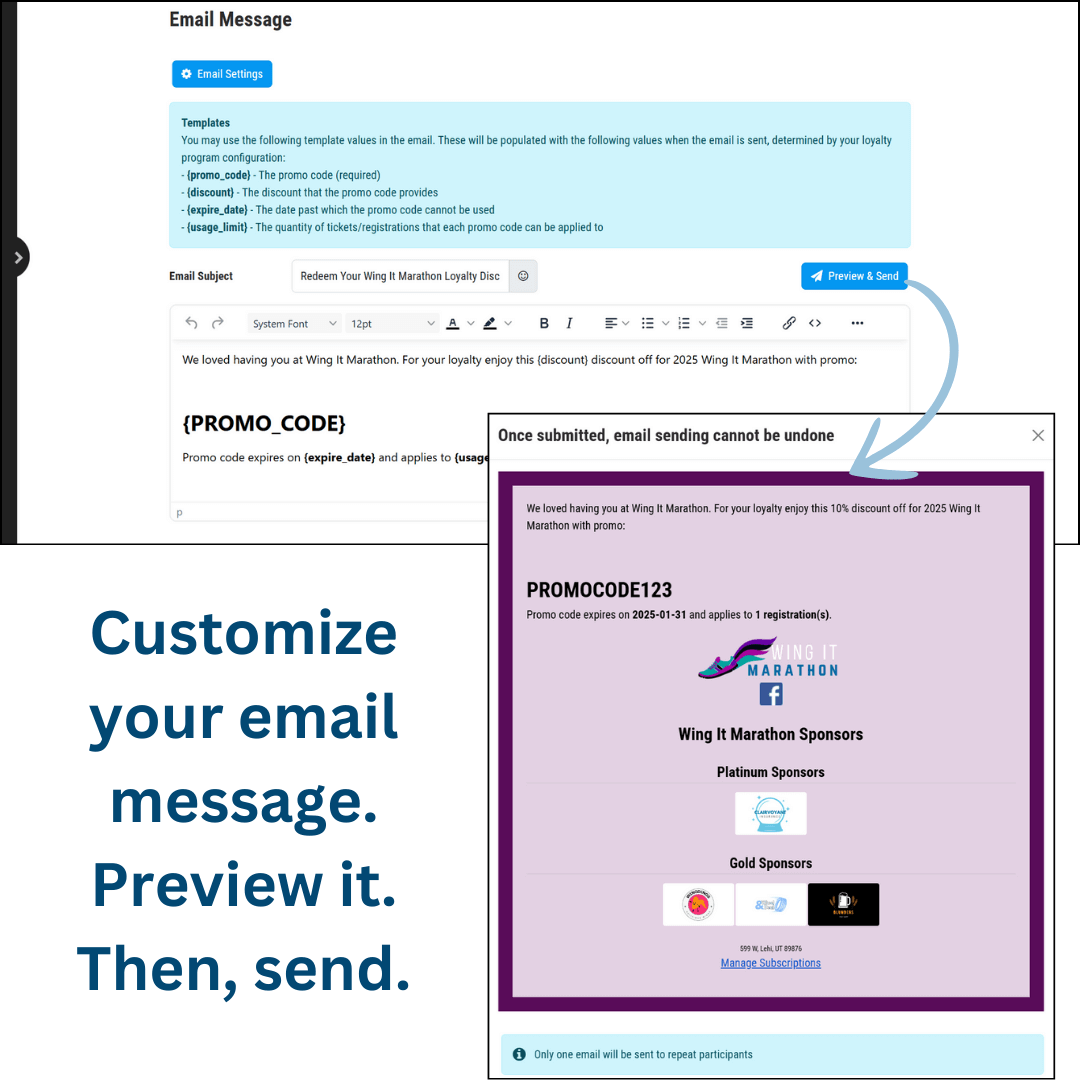
Then, customize your email. Review your email, and send it.
You can then track redemptions to see how effective your loyalty program is.

Mileage Club Management
For a mileage club, it takes a little more work. First, you’ll need to look at all of the runners who’ve participated in your race each year. Note the distances they’ve run. And, convert it as needed from kilometers to miles.
Keep a total of all of the miles run by each participant so you know when a participant qualifies for each of your mileage clubs.
When you’re welcoming a new member to the club, highlight their accomplishment by making it a big deal. Give them recognition with special swag and even a plaque. You can also give recognition by listing their names on your website and in your race guide.
While loyalty programs help keep your participants coming back for more at your race, they’re also a nice way to thank your biggest fans.
Loyalty and Growth
Consider organizing multiple races as part of your business. You can build an engaged audience across your races even without a loyalty program and even offer discounts based on the number of races an athlete signs up for with series registration.
Growing your race isn't just about building retention. You'll also want to find ways to attract new athletes to your race. Race Entry offers many tools that make implementing your growth strategy easy. Checkout the articles below to learn more about how to grow your race: